 Omrdon Technology
 Shenzhen OMRDON TECHNOLOGY
---- specializes in lightning safety and protection.

Low-voltage power line lightning protection
Low-voltage power line system lightning protection and over-voltage protection selection and technical guide (must read before selection)
I. The threat of lightning and the need for protection
Damage caused by lightning intrusion into electronic equipment through power lines accounts for more than 80% of lightning strikes, which stems mainly from:
direct lightning strike: lightning strikes directly on power lines, generating extremely high transient voltages and currents
inductive lightning strike: Electromagnetic induction coupled to the line from nearby lightning strikes
potentiometric countermeasures: Lightning strikes on grounding systems result in elevated potentials and reverse intrusion
According to the IEC 62305 series of standards, GB/T 18802 national standards and the recommendations of lightning protection experts, it is necessary to establish a systematic, multi-level protection system.
II. Deeper Analysis of the Principle of Graded Protection
2.1 Energy dissipation mechanisms
Level 1 (T1): Discharge the majority of the lightning current (70-801 TP3T energy)
Level 2 (T2): further limiting residual pressure and shunting residual energy
Level 3 (T3): Fine protection to reduce the voltage to the safe range of the equipment
2.2 Waveform Conversion and Energy Matching
10/350μs waveform: Simulates a direct lightning strike, which is very energetic and requires T1 level protection.
8/20μs waveform: Simulation of induced lightning strikes, T2 level of protection for main objects
1.2/50μs voltage waveforms: Equipment Insulation Test Standards, T3 Protection Reference
Detailed technical specifications for three- and four-level protection systems
3.1 First level of protection: main distribution room (LPZ 0A → LPZ 1)
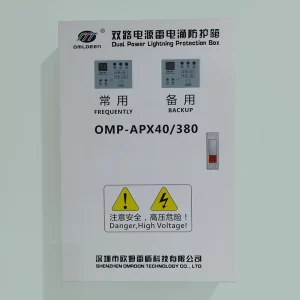
mounting position: Low-voltage side of transformer, incoming terminal of main distribution cabinet
technical requirement::
Through-current capacity: 15-25kA (10/350μs)
Voltage protection level: ≤2.5kV
Response time: <100ns
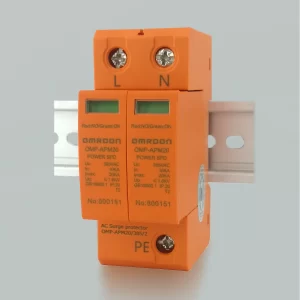
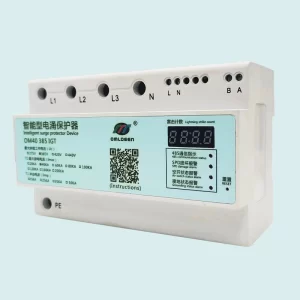
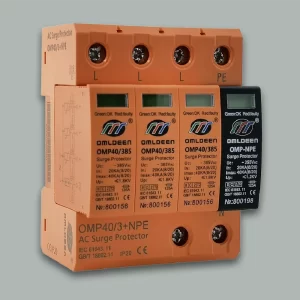
Recommended Product Type: Spark Gap Surge Protectors
Key parameters::
Continuous operation voltage: ≥385V (three-phase) / ≥255V (single-phase)
Failure indication: remote alarm contact
Backup protection: matching special fuse or circuit breaker
3.2 Level 2 protection: floor distribution cabinets/boxes (LPZ 1 → LPZ 2)
mounting position: Sub-distribution cabinets, floor well distribution boxes
technical requirement::
Through-current capacity: 60-100kA (8/20μs)
Voltage protection level: ≤1.8kV
Response time: <25ns
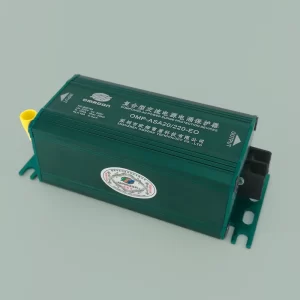
Recommended Product Type: Voltage-limited surge arresters (MOV)
Installation points::
Distance from the first level of protection: line length ≥ 15m or add decoupling device
Connection line length: ≤0.5m, reduce parasitic inductance
3.3 Level 3 protection: switchboards in equipment rooms/rooms (LPZ 2 → LPZ 3)
mounting position: Computer room distribution boxes, UPS inputs, precision equipment front-ends
technical requirement::
Through-current capacity: 20-40kA (8/20μs)
Voltage protection level: ≤1.5kV
Response time: <25ns
special requirement::
Low residual voltage, high following voltage
Optional lightning protector with filtering function to suppress high frequency interference
3.4 Fourth level of protection: terminal equipment (fine protection)
mounting position::
Equipment Cabinet PDU
Equipment Front Socket
Device Internal Power Module
technical requirement::
Class T2: 5-20kA (8/20μs), voltage protection level ≤1.2kV
Class T3: Combined wave (1.2/50μs voltage wave + 8/20μs current wave)
Product Forms::
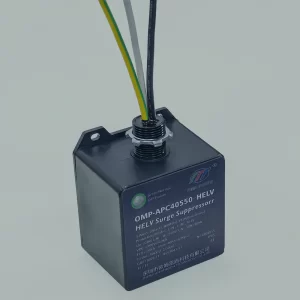
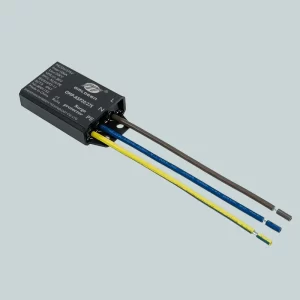
Plug-in Lightning Protector
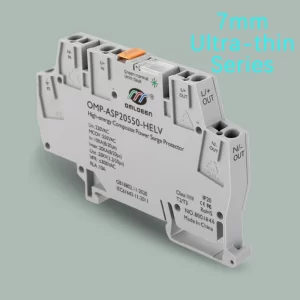
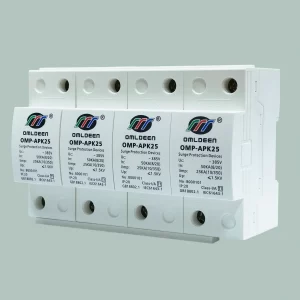
DIN-Rail Mounting Lightning Protection Module
Equipment with built-in lightning protection module
IV. Summary and recommendations
Lightning protection for low-voltage power systems is a systematic project that must be followed:
completeness: protection without omission, covering all introduction paths
hierarchical: Multi-stage coordination, step-by-step energy release
coherence: Good cooperation between SPDs and between SPDs and equipment
dependability: Selection of quality products, standardized installation, regular maintenance
If you have specific application scenarios or technical parameters to consult, our team of engineers is ready to provide you with professional technical selection support.→ Online Consultation