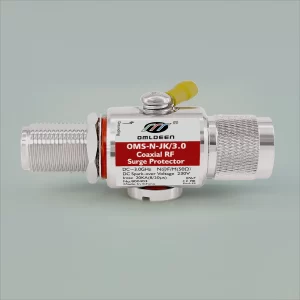
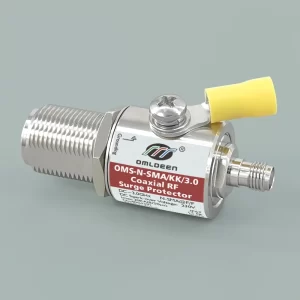
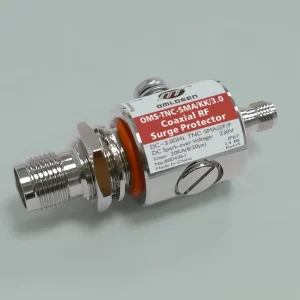
OMS-NFM/1.570L,1.5~700MHz, DC Block,20KA,Antenna Surge Protector,Antenna Surge Protector,Base Station Antenna Lightning Arrester for HF/UHF/VHF Antenna or Receiver
OMS-NFM/1.570L,1.5~700MHz, DC Block,20KA,Antenna Surge Protector,Antenna Surge Protector,Base Station Antenna Lightning Arrester for HF/UHF/VHF Antenna or Receiver
OMS-NFF/1.570L, OMS-NFM/1.570L, 1.5~700MHz, DC Block,20KA,Antenna Lightning Protector,Antenna Surge Protector,Base Station Antenna Lightning Arrester for HF/UHF/VHF Antenna or Receiver
Products::
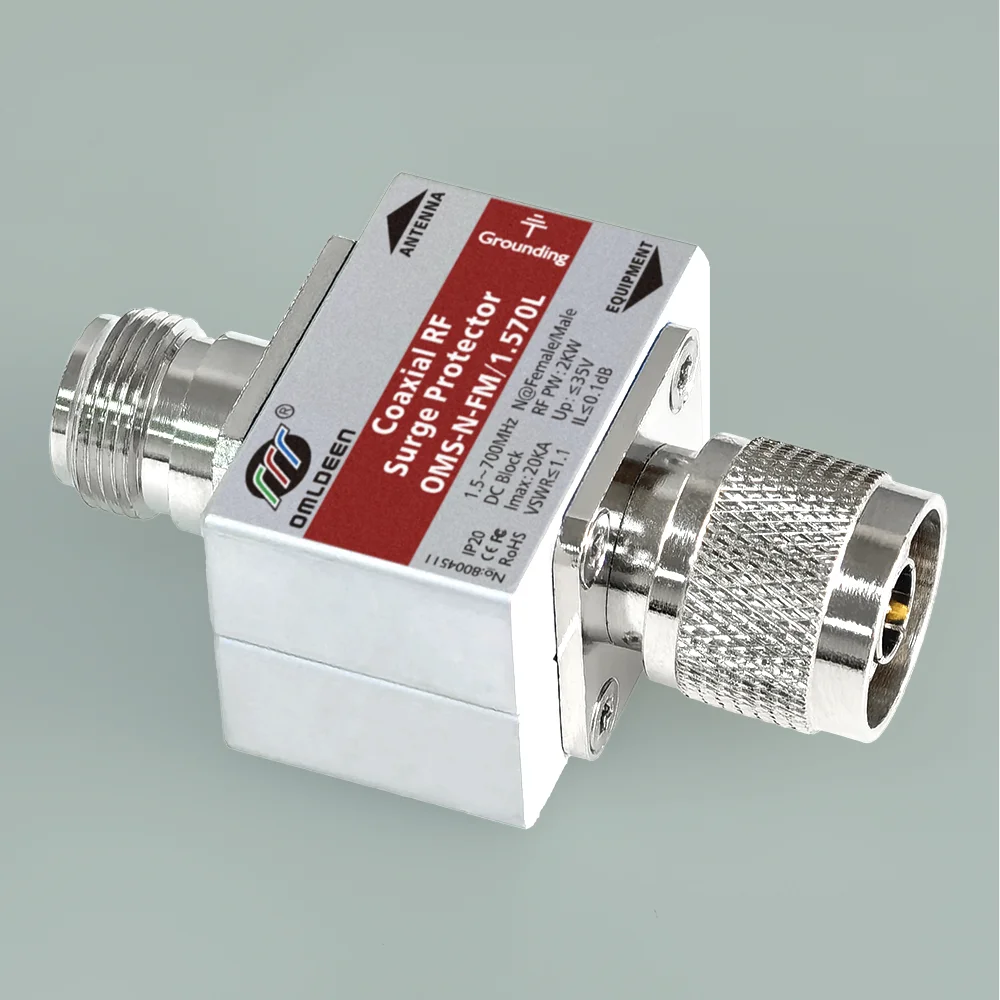
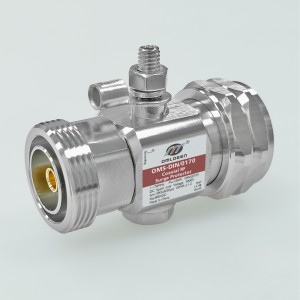
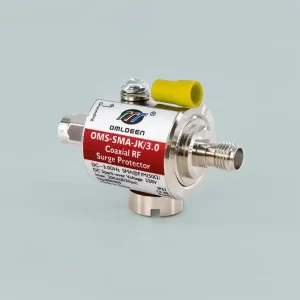
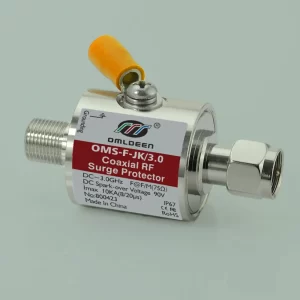
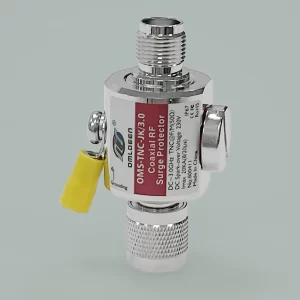
OMRDON 1.5~700MHz RF Surge Protector (also known as Antenna Surge Arrester) utilizes DC isolation and gas discharge tube technology for frequency bandwidths of 1.5~700MHz. It allows signal transmission within the target frequency range while accurately suppressing surge interference, providing reliable surge overvoltage protection for HF/UHF/VHF antennas, radio equipment and other RF equipment. Optional mounting brackets are available.
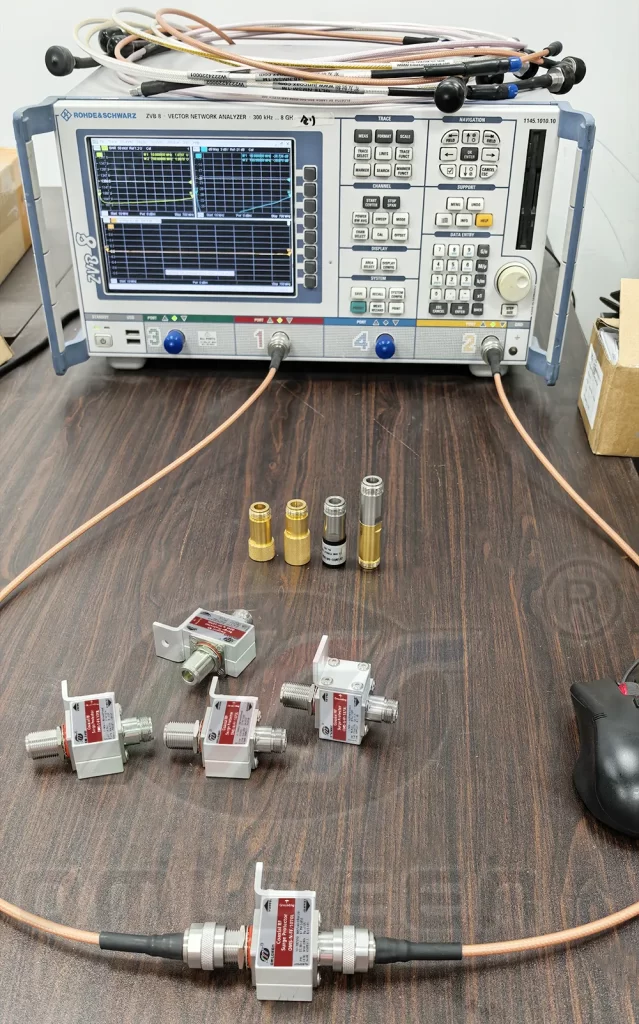
The product adopts shielded shell package, built-in high-quality high-speed over-voltage protection devices, each product has been debugged, with extremely low VSWR and insertion loss, the antenna feeder line induced by lightning high-voltage pulses with high efficiency protection and defense function.
Functional Features::
Lightning impulse current up to 20KA
Maximum continuous power 2KW (CW)
Frequency range 1.5-700MHz
Waterproof rating IP20
N-type connector one male(female) to female (male(female) to female)
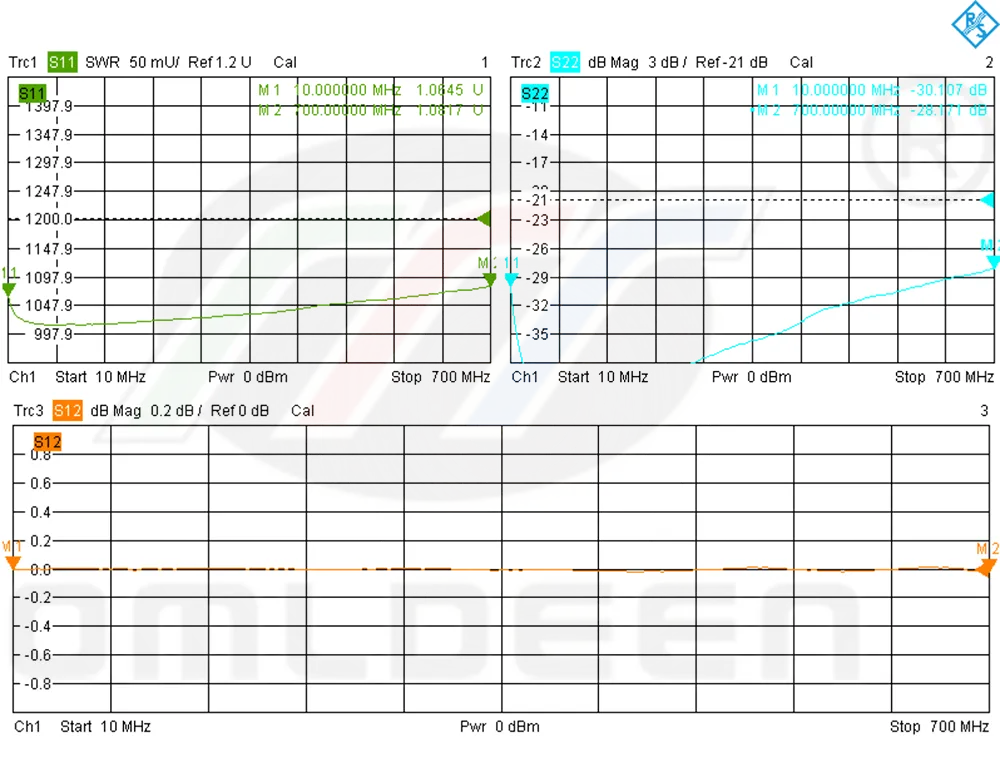
Very low VSWR <1.1
Characteristic impedance 50Ω
International Certification RoHS, CE, FCC
typical application::
High Frequency (HF)
Ultra High Frequency (UHF)
Very High Frequency (VHF)
Amateur radio (Ham radios)
Technical Parameters::
Electrical Specifications
model number
OMS-NFF/1.570L OMS-NFM/1.570L
frequency range
1.5~700MHz
Nominal Inrush Current (In) (8/20μs)
10KA
Maximum inrush current (Imax) (8/20μs)
20KA
Response time (Ta)
≤100ns
Input power (CW)
2KW
V.S.W.R
≤1.1
insertion loss
≤0.1 dB
DC starting voltage
450V±10%
Voltage Protection Level (VPR) (8/20μs@10kA)
≤35V
Voltage Protection Level (VPR) (1.2/50μs@4kV)
≤20V
Residual energy (E) (8/20μs@3KA)
20μJ
(electrical) impedance
50 Ω
electrical insulation resistance
≥1MΩ
Mechanical specifications
interface method
N@female(male) to female
makings
Aluminum@Anodizing
Grounding resistance Ω
≤4Ω/≥4mm2
sizes
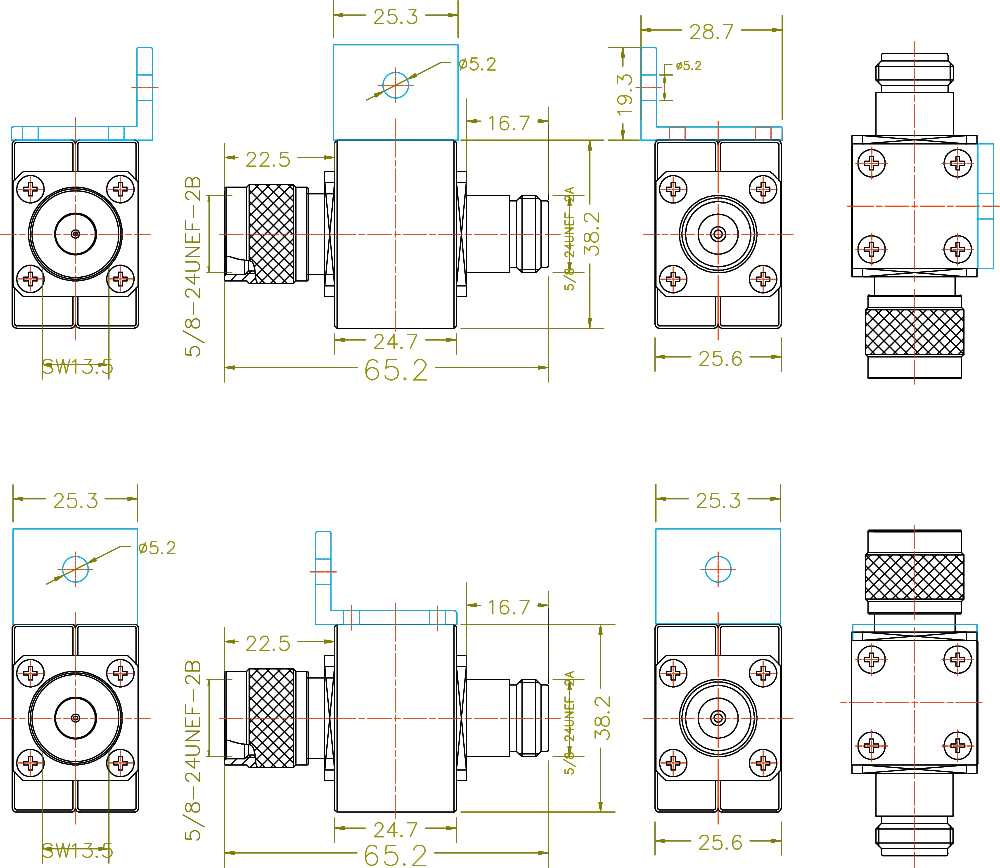
65.2 x57.5 x 25.5 mm
weights
135g [0.3 lbs]
Environmental norms
Operating Temperature Range
-40 ~ +85℃, altitude ≤4km
Relative air humidity
30%~90%
Protection class (IP)
IP20
Other information
Compliance Certification
CE, RoHs, FCC, ISO9001-2015
Implementation of standards
gb/t18802.21/lec61643-21
part numbers
8004510, 8004511
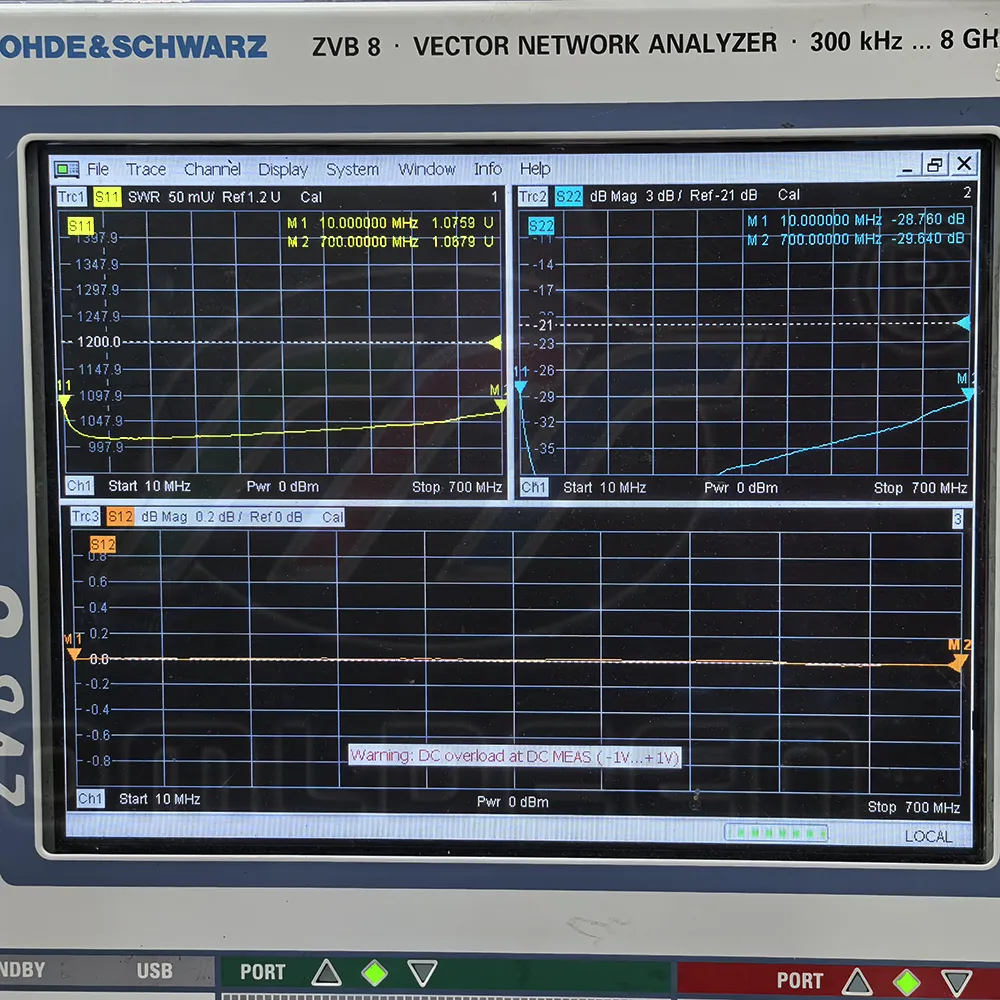
Typical Performance Test Data
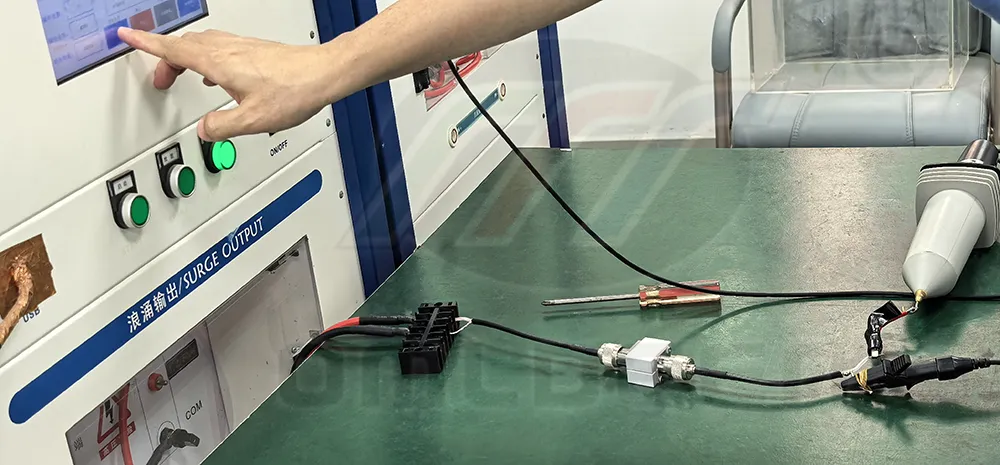
Simulated Lightning Impact Test
Product Dimension Drawing
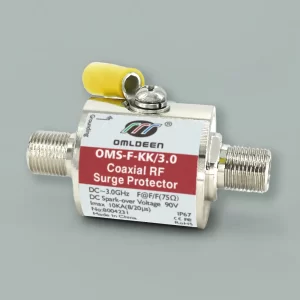
Product Series
Installation Notes: 1. In order to reliably prevent the lightning attack, you can connect an antenna lightning protector in series at the output of the antenna and at the input of the protected equipment. Please note: The antenna lightning protector should be differentiated between input/output terminals, with the input terminal connected to the surge terminal and the output terminal connected to the protected equipment, please do not connect it in reverse, or it will result in a discounted protection effect. 2, the lightning protector on the grounding screw connection as short as possible on the grounding wire (wire area of not less than 4mm)2), the other end is reliably connected to the lightning protection system grounding bus, and the grounding resistance is not more than 4Ω. 3, this product does not have waterproof function (IP20), used in outdoor use of antenna feeder should pay attention to rain, do not let the rain soak into its internal corrosion damage. 4, this product does not require special maintenance. When the system works faulty, you can remove the lightning protector and then check, if the system returns to normal after restoring to the state before use, it means that the lightning protector has been damaged and must be replaced immediately.
Q1: What is the main function of this lightning protector? A: This product is mainly used to protect RF equipment such as antennas, radios, base stations, etc. from over-voltage damage caused by lightning strikes or power grid surges. It can transmit signals in the 1.5∼700MHz frequency band while rapidly discharging the surge current to ensure the safety of the equipment.
Q2: What does “DC isolation” mean? What are the benefits to me?
A: “DC isolation” means that the internal design of this lightning arrester hasstraightjacket functionIts role is toCompletely blocks the passage of direct current (DC) in the signal pathThe
What this means for you:
Applicable systems are clearly defined: itonly applicable toThe antenna system itselfNo need for DC remote power via coaxial cableof the scenario. For example, common passive antennas, most VHF/UHF base station antennas, and so on.
Core protection benefits: It can be effective precisely because of the blocking of DC:
Isolated ground potential difference: Prevents the formation of loop currents from the DC potential difference between the grounding terminals of different equipment, thus avoiding equipment damage or signal interference.
Prevent accidental DC injection: To avoid DC voltage tampering into the RF port due to power failure/interference or other unforeseen circumstances that could damage the core transceiver equipment.
Important Notes::If your antenna system isactive antennaor if you need to provide a coaxial cable for a remoteTower amplifier (tower top amplifier) provides DC power supplyconjunction used express contrast with a previous sentence or clauseunavailableThis is a “DC cut-off” type of lightning protector, which would otherwise interrupt the power supply and render the equipment inoperable. In this case, you need to choose a “DC pass-through” or “bias-fed” type of lightning protector.
Q3:My device frequency is XXX MHz, can I use this lightning protector? A: The frequency range of this product is 1.5∼700MHz, covering common frequency bands such as HF, VHF and UHF. As long as your equipment's operating frequency is within this range and the interface is N type, it can be used.
Q4: Maximum input power 2KWW, does it include peak power? A: 2KW is Continuous Wave (CW) power, which is the upper limit of power for the device to work stably for a long period of time. If the peak power of your device does not exceed this value and the duration is short, it can usually be used. It is recommended to reserve a certain margin to ensure safety. If you need more power, please let us know and we can customize the production for you.
II. Installation and grounding
Q5: What do I need to pay attention to when installing? A:
tandem access: Connect the lightning arrestor in series in the RF path between the antenna and the equipment.
good grounding: It must be reliably grounded using a wire with a cross-sectional area of ≥4mm² (12AWG), and the grounding resistance is recommended to be ≤4Ω.
waterproofing: Although the protection rating is IP20 (drip-proof), it is recommended to be installed indoors. If installed outdoors, waterproof protection is required.
Q6: Does the standard preparation configuration come with a mounting bracket? A: The product is equipped with an L-shaped mounting bracket, which supports hole mounting (with mounting holes on the side), making it easy to fix on the wall or rack. If the bracket is not required, the feeder can also be fixed to achieve the purpose of fixing the lightning protector.
Q7: How long should the grounding wire be? Are there any special requirements? A: The grounding wire should be as short, straight and thick as possible to reduce the grounding impedance. It is recommended that the length should not exceed 1 meter, use yellow-green insulated and sheathed copper core wire, and ensure that the joints are tight and free of oxidation.
Third, the performance parameters and the use of the effect
Q8: Does this lightning protector attenuate the signal? A: Extremely low insertion loss (≤0.1dB) is an excellent indicator, with virtually no perceptible impact on signal strength.
Q9: Voltage Standing Wave Ratio (VSWR) ≤ 1.1, is this a good value? A: VSWR ≤ 1.1 is a very good indicator, indicating that the lightning protector has very little impact on the system matching, almost does not cause signal reflection, suitable for communication systems with high matching requirements.
Q10: How many lightning strikes can this lightning protector protect against? A: The product can withstand a nominal surge current of 10kA (8/20μs) (we simulate the lightning impact test in the laboratory: 10 times for each positive and negative polarity, each time at an interval of 60s) and a maximum surge current of 20kA (laboratory simulation of the lightning impact test: 1 time for each positive and negative polarity, each time at an interval of 60s) without damage, and the performance indicators are normal. The actual service life is related to the intensity and number of lightning strikes, it is recommended to check the system performance after a strong lightning strike and replace it if necessary.
IV. Troubleshooting and maintenance
Q11: What may be the reason that the device does not work properly after installation? A: Please follow the steps below to troubleshoot:
Check that the RF connection is tight and that the connector interface is correct (type N).
Verify that the device frequency is within the range of 1.5∼700MHz.
If the device relies on DC power (e.g., some active antennas), check whether the power supply has been interrupted by the “DC blocking” function.
Temporarily remove the lightning protector and connect the antenna directly to the equipment to determine if the lightning protector is faulty.
Q12: Do lightning protectors need to be replaced periodically? A: The lightning protector can work stably for a long period of time when there is no lightning strike or surge event. It is recommended that the grounding connection and appearance be checked once a year for completeness. If your area has frequent thunderstorms or has been subjected to strong lightning strikes, it is recommended that it be inspected or replaced periodically.
V. Certification and after-sales service
Q13:What certifications have the products passed? A: This product implements GB/T18802.21/IEC61643-21 test standards and has passed CE, RoHS and FCC certification.
Q14: Is there a warranty? How do I contact technical support? A: The product comes with a limited warranty (please refer to the purchase contract or label for exact duration). If you have technical problems or need after-sales support, please contact: telephones: (+86)0755-82591856 node::www.omrdon.com address8/F, Building 6, Intelligent Manufacturing Industrial Park, Shenzhen Pingshan Hi-Tech Zone, No. 2 Wo Tian Road, Kengzi Street, Pingshan District, Shenzhen, China
If there are any other requests, feel free to let me know and we'll tweak it together.
 Omrdon Technology